
Dental Implants
Perhaps you’ve lost a tooth or maybe it has always been missing.
Dental implants offer the most lifelike, naturally-functioning choice for restoring gaps in teeth. At Fiacla Dental Clinic, Dr. Shelley and his team offer implants for patients who may require a replacement for a single tooth, several teeth or a full arch. Our newly-renovated clinic in Dublin 14 uses the latest equipment and trusted technology to provide high-quality care for patients.
What is a Dental Implant?
Simply put, a dental implant is a metal post that is inserted into the jawbone, mimicking the root of a tooth. It is made from titanium (which the body tolerates exceptionally well) and, over a period of months, connects to the bone beneath the gum and locks it in place. This process is called osseointegration, and it is what gives an implant its stability.
Above the gum, there is a porcelain crown that looks and acts like a real tooth. The crown is matched to the same colour of your actual teeth, so it appears lifelike and natural. Once the dental implant is placed and set in the jaw, it takes 6 months or so for the gum and bone to fully heal around it.
What to Expect from Dental Implants
Dental implants are a multi-visit process that takes several months to complete.
The first part of dental implant treatment involves surgery below the gumline. This is initiated by first taking a 3D CBCT scan of the area to show us exactly how much bone is available and where the nerves and sinuses sit, so the implant can be planned accurately. The implant is then placed surgically into the bone, mimicking the root of a toothThe implant takes time to connect to the bone. When it's ready, up to six months later, we begin the process of making the implant crown.
For this part of the treatment,
The first visit involves copying the relationship of the implant to surrounding teeth using an intra-oral scanner, which will be sent to a dental lab to fabricate the crown.
The second visit is when the placement of the implant crown takes place. There could be some swelling and soreness for a few days afterwards, which can usually be managed at home with your usual pain relied We also check the fit, the bite and the colour match before it's finally secured.

Will it dental implants look natural?
This is usually the main question we get from patients. The crown is made individually for you by an experienced dental technician using quality materials The crown of your implant is shaped to your mouth and colour-matched to the teeth beside it.
So, once it's in, it sits at the gumline the same way a natural tooth does.
Most adults in reasonable dental health are suitable. What we tend to look for are healthy gums and enough bone in the right place to hold the implant securely.
If there isn't enough bone, that isn't the end of it. A bone graft or a sinus lift can build up the site before the implant goes in, and we'll tell you at the planning stage if that's likely in your case. Some lifestyle factors can also make getting dental implants more complex. For example:
Diabetes that isn't well controlled
Heavy smoking
Gum disease
Certain medications
Radiotherapy to the head or neck
These can all affect how well an implant heals and integrates. Rather than rule it out, we'll talk these through openly at your appointment and discuss your options. Where an implant genuinely isn't the right answer, we'll say so and talk you through a bridge or a denture instead.
Are Dental Implants Right for you?
How Much Do Dental Implants Cost?
The answer is that the cost varies. Each person’s mouth is different and factors like how many teeth are being replaced or what needs to happen before the dental implant goes in can affect the price. What we can do is be clear about it from the start.
At Fiacla Dental Clinic, the fee for an implant crown ranges from €1,550 to €1,650.
Where additional dental work needs to be carried out, for example a bone graft, sinus lift or extraction is needed first, that can carry an additional cost. However, our trusted team will explain all costs and procedures before any work begins.
Your treatment may included a referral to a specialist for the placement of the metal implant into your bone, and/or if bone grafting or a sinus lift is required.
Meet Your Implant Dentist
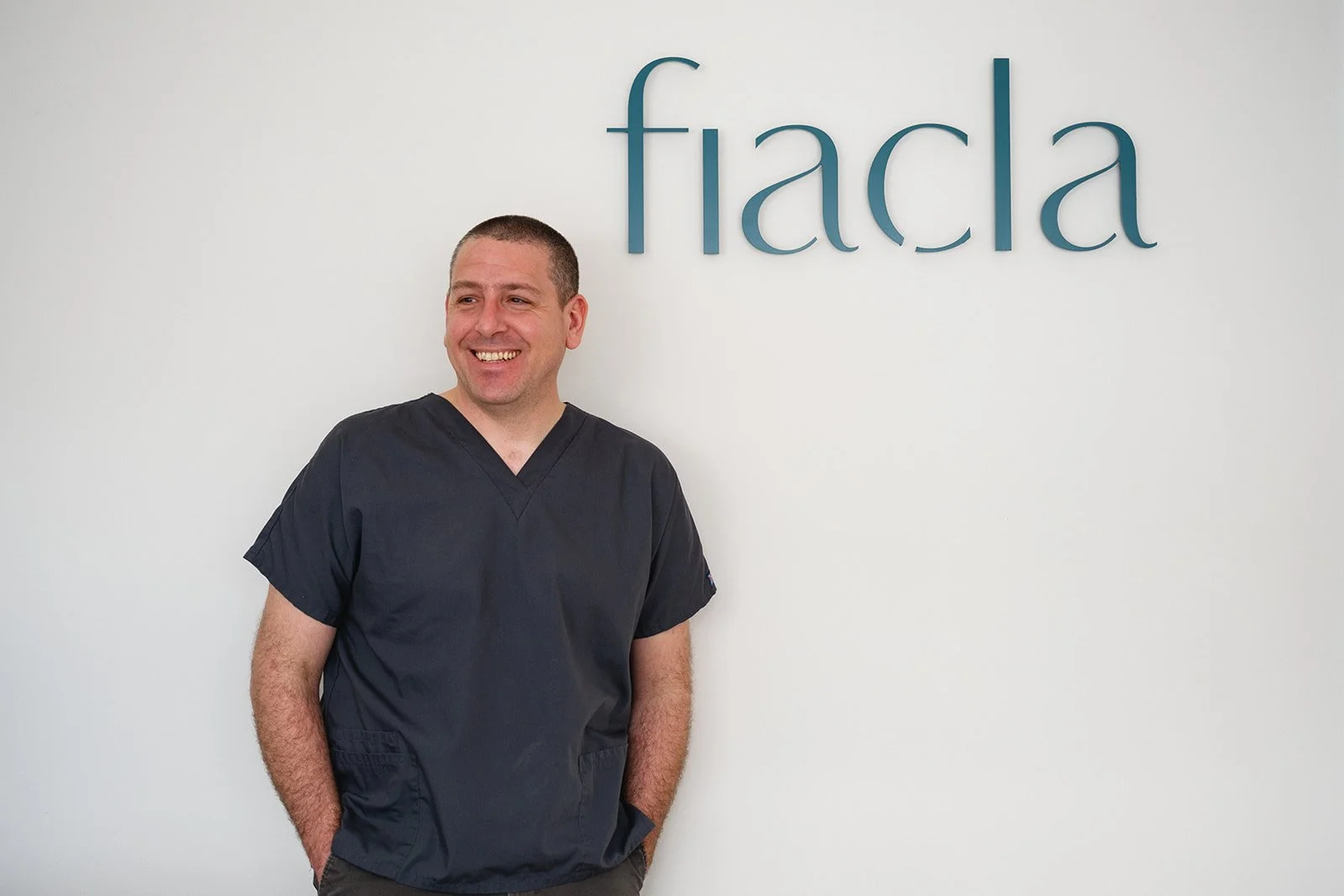
Dr. Shawn Shelley is the Founder and Principal Dentist at Fiacla Dental Clinic. He has worked in private practice for almost fifteen years in Singapore and Ireland. Dr. Shelley is an empathetic, diligent dentist, with a calm and caring patient manner. He completed his Pre-Med degree at the University of Wyoming, USA before qualifying as a dentist at Trinity College Dublin.
At Fiacla Dental Clinic, each patient is unique and we base our high-quality dental care around your individual needs.
Tax Relief on Dental Implants
You may be able to claim tax relief at the standard rate on non-routine dental treatment for the surgical part of dental implant treatment. You can confirm this with Revenue before your treatment. Likewise, if you have private health insurance you should check with your provider to confirm your level of cover and whether dental implants are included in your policy.
How to Look after Your Dental Implants
For the first day or two, keep to soft food, avoid the surgical site when brushing and skip anything hot or strenuous. The swelling tends to be worst around days two and three and settles after that.
Ensure you keep up your regular dental exam and cleaning appointments. At these appointments, we can check the site has healed well and that you're able to keep the area properly clean.
Going forward, an implant simply requires the same care as a natural tooth, with one difference: the gum around it is less forgiving of plaque. So, you should:
Brush twice daily
Clean between the teeth with interdental brushes or implant-safe floss
Keep up with your regular hygienist appointments
Implants don't decay, but the bone supporting them can be lost to infection if they're neglected. Looked after properly, they can last for decades. We also advise that patients stop or avoid smoking or vaping as it can increase the risk of an implant failing to integrate.
Placing a dental implant is minor surgery and as with all surgery, there are some risks. For example, infection, bleeding and swelling can be common and are usually easy to manage.
Less commonly, an implant might fail to integrate correctly and may need to be removed so the site can heal before trying again. Damage to nerves or the sinus is also rare and is precisely what the 3D scan and careful planning are there to prevent.
If you do notice any issues or feel any increased pain or swelling that doesn't resolve, call us immediately to make an appointment.
Can something go wrong with Dental Implants?
What Choose Fiacla Dental for Your Dental Implants?
I honestly couldn't recommend Shawn, Niamh, and the team at Fiacla Dental highly enough.
I've had a crippling fear of the dentist for many years and avoided going far more often than I should because of it. From my very first visit, they went above and beyond to make me feel comfortable and at ease.
Shawn has such a calm, gentle manner during every procedure, and Niamh and the whole team are incredibly kind, patient, and reassuring. They never make you feel rushed or judged, and they genuinely care about making the experience as stress-free as possible.
Thanks to their support, I'm no longer terrified of going to the dentist and now feel much calmer and able to attend regular appointments. If you're a nervous patient like me, I genuinely couldn't recommend Fiacla highly enough.
- Kim H.
Fiachla Dental is the best dental practice I have ever experienced.
From the moment you step into the Clinic you feel at ease - having designated parking spots out front, and a wonderfully calm and beautifully appointed waiting room.
In my visits to the Clinic I have found the staff are attentitive, friendly and efficient.
Dr Shawn is informative, thorough and has a very clear and calm manner.
I feel that if I had been attending a Dental Clinic like this previously over the years, then I wouldn't have been as nervous about dental work.
They are second to none, and I am delighted that I have moved to this practice, and my husband will be doing the same!
- Caroline B.
I've visited Dr Shawn at Fiacla Dental a few times now and every experience is more positive than the last! I honestly could not recommend this place more highly or say enough positive things about this clinic! There is a warm, calm, friendly and welcoming environment from the minute you walk through the door. The place is spotlessly clean with a very relaxing vibe. I've never been one to be overly nervous of the dentist but from the second I walked in, Conor the dental nurse put me completely at ease with his bubbly and warm demeanour. My visits with Dr Shawn and most recently with Heloisa alongside him for an extraction an,d during the week, a scale and polish have been extremely positive. Everything is explained clearly without overwhelming information. Clearly these are highly skilled professionals who put all nerves to rest from the moment you arrive. I'm literally telling everyone who will listen to move to this clinic. Second to none!
- Ann C.Frequently Asked Questions about Dental Implants
-
Prices vary from patient to patient. At Fiacla Dental, we’ll give you a full breakdown of the cost of your dental implants. Plus, any additional or related costs from procedures such as a bone graft or sinus lift before your treatment begins.
-
You may be able to claim tax relief at the standard rate on non-routine dental treatment for the surgical part of dental implant treatment. You can confirm this with Revenue before your treatment. This is usually claimed using a Med 2 form but you should check this independently prior to your treatment.
-
Cover depends entirely on your policy. Some dental plans contribute towards implant treatment and others exclude it. Check directly with your insurer before you start, and we'll supply any treatment details they need.
-
The area is fully numbed before the implant is placed, so you shouldn't feel pain during the procedure itself. Expect some tenderness and swelling for a few days afterwards, which can be managed with your usual methods of pain relief.
-
Usually six months from placement to final crown. More complex cases might take a little longer.
-
With good cleaning at home and regular professional care, implants can sometimes last decades. The crown on top may need replacing sooner than the implant itself.
-
For most patients, yes. An implant leaves the neighbouring teeth untouched and keeps the jawbone stimulated and fixed in place. A bridge requires healthy teeth either side to be filed down, and a denture sits on the gum and can move. That said, implants aren't right for everyone, and we'll advise you which option suits you better.
What to expect
Dental implants are a multi-visit process that take several months to complete. Simply put, an implant is a metal post that is inserted into the bone, mimicking the root of a tooth. The implant takes time to connect to the bone (osseointegration). When the implant is ready (up to 6 months) we will begin the process of making an implant crown. An implant crown will take 2 visits to complete. The first visit involves copying the relationship of the implant to surrounding teeth, which will be sent to a dental lab to fabricate the crown. The second visit is then the placement of the implant crown.